
FT2: A New Horizon in Digital Communication for Amateur Radio
6/16/20264 min read
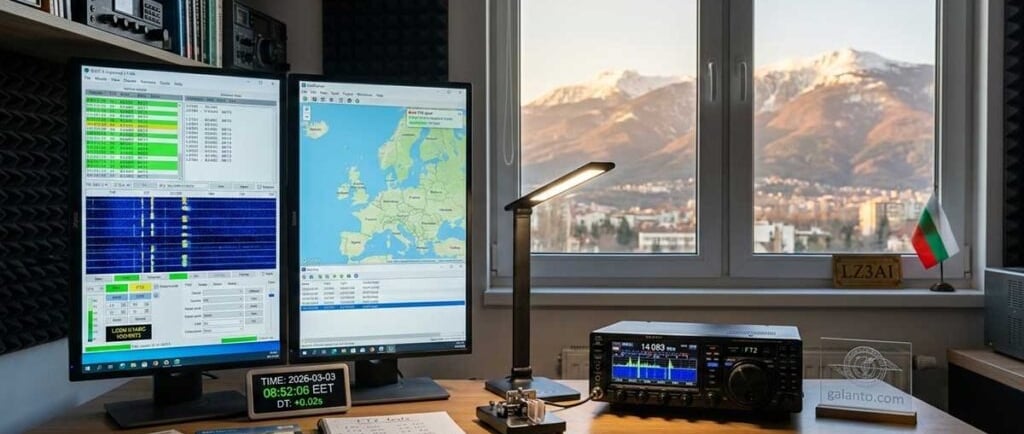
FT2: A New Generation of Digital Communication for Amateur Radio
Introduction
For nearly a decade, FT8 has dominated weak-signal digital communications in amateur radio. Its remarkable sensitivity and efficient use of spectrum transformed the way operators work DX, chase awards, and maintain contacts under difficult propagation conditions. Yet as successful as FT8 has been, many operators have questioned whether digital communications could become faster without sacrificing weak-signal performance.
FT2 was developed to answer that question.
Introduced as part of the Decodium Shannon project, FT2 is a next-generation digital communication mode designed to dramatically reduce contact times while maintaining the reliability and sensitivity that operators have come to expect from modern weak-signal modes. Rather than simply improving upon FT8, FT2 reimagines how digital QSOs can be conducted in today's increasingly crowded amateur radio bands.
Why FT2 Was Created
FT8 revolutionized amateur radio by enabling contacts with signals far below the noise floor. However, its 15-second transmit/receive cycle introduces inherent limitations.
A typical FT8 QSO requires multiple transmission periods to exchange callsigns, signal reports, acknowledgments, and confirmations. Even under ideal conditions, a complete contact often takes one to two minutes.
While this operating style is effective, it can become restrictive during:
Contest operations
Special event stations
Emergency communications
High-volume DXpeditions
Portable activations
Rapid propagation openings
FT2 was designed to address these limitations by significantly shortening transmission cycles while preserving weak-signal capability.
Faster by Design
One of FT2's most notable characteristics is its transmission timing.
Where FT8 uses 15-second transmission periods, FT2 operates with cycles of approximately 3.8 seconds. This reduction allows information exchanges to occur much more rapidly, enabling complete contacts in a fraction of the time required by traditional FT8 operation.
The practical advantages include:
More contacts per hour
Reduced waiting between exchanges
Improved use of short propagation openings
Greater efficiency during pileups
Faster confirmation of successful reception
For operators accustomed to FT8's rhythm, FT2 feels dramatically more responsive.
Maintaining Weak-Signal Performance
Speed alone would not make FT2 valuable if it came at the expense of sensitivity.
The developers of FT2 focused heavily on maintaining robust performance under weak-signal conditions. Advanced forward error correction, modern synchronization techniques, and sophisticated decoding algorithms allow FT2 to remain effective even when signals are difficult to hear.
The mode benefits from the advanced decoding technologies developed within the Decodium project, including multi-pass processing and enhanced signal extraction techniques.
As a result, FT2 seeks to provide a balance rarely achieved in digital communications: high speed combined with weak-signal reliability.
A Better Experience During Band Openings
HF propagation is often unpredictable.
Openings on 10 meters, 6 meters, and other bands can appear suddenly and disappear just as quickly. During these brief opportunities, operators often wish they could complete more contacts before conditions change.
FT2's short transmission cycles are particularly valuable in these situations.
Instead of spending over a minute completing a single contact, operators can rapidly exchange information and move on to the next station while propagation remains favorable.
This capability could prove especially important during:
Sporadic-E openings
Meteor scatter events
Gray-line propagation
Contest weekends
Solar-maximum conditions
Reducing Band Congestion
As FT8's popularity has grown, so has congestion around its designated frequencies.
FT2 offers a potential solution by increasing communication efficiency. Faster contacts mean stations occupy decoding slots for shorter periods, allowing more activity to take place within the same spectrum allocation.
Although FT2 is not intended to replace existing modes overnight, its design philosophy reflects a broader goal of improving spectrum utilization as digital activity continues to expand worldwide.
Integration with Decodium Shannon
FT2 is closely associated with the Decodium Shannon platform, where it serves as one of the flagship technologies.
The mode benefits from:
Advanced multi-core decoding
Multi-pass signal processing
Enhanced synchronization methods
Integrated operating tools
Modern user-interface design
Together, these technologies create an operating environment optimized specifically for rapid digital communication.
Potential Applications
FT2's combination of speed and sensitivity opens possibilities across many areas of amateur radio.
DX Hunting
Rapid contacts allow operators to work more stations during favorable propagation windows.
Contesting
Higher contact rates can improve overall scoring efficiency while reducing time spent waiting for exchange completion.
Portable Operations
Operators participating in Parks on the Air (POTA), Summits on the Air (SOTA), and field activities can maximize contacts during limited operating periods.
Emergency Communications
Short transmission cycles may improve message throughput when efficient communication is essential.
Experimental Radio
FT2 provides a platform for exploring new approaches to digital communication and spectrum efficiency.
Challenges Ahead
Like any new digital mode, FT2 faces several challenges.
Its long-term success will depend on:
Adoption by amateur radio operators
Software support across multiple platforms
Continued development and refinement
Community acceptance
Demonstrated real-world performance
FT8's widespread popularity means any successor must offer meaningful advantages while remaining accessible to existing operators.
FT2 appears designed with exactly that objective in mind.
Looking Toward the Future
Digital communication continues to evolve at a remarkable pace. Advances in signal processing, computing power, and software design are enabling modes that would have been difficult to imagine only a few years ago.
FT2 represents an important step in that evolution. By dramatically reducing contact times while preserving weak-signal capability, it challenges traditional assumptions about what digital amateur radio can achieve.
Whether FT2 becomes a mainstream operating mode or serves as a foundation for future innovations, its development demonstrates that there is still significant room for advancement in amateur radio digital communications.
Conclusion
FT2 is more than simply a faster version of FT8. It represents a fresh approach to digital communication—one focused on speed, efficiency, and modern operating requirements.
By combining rapid transmission cycles with advanced decoding technology and weak-signal performance, FT2 offers a glimpse into the future of amateur radio. As operators continue to seek more efficient ways to communicate, FT2 may well become one of the most important digital-mode developments of the coming decade.